{{ 'fb_in_app_browser_popup.desc' | translate }} {{ 'fb_in_app_browser_popup.copy_link' | translate }}
{{ 'in_app_browser_popup.desc' | translate }}
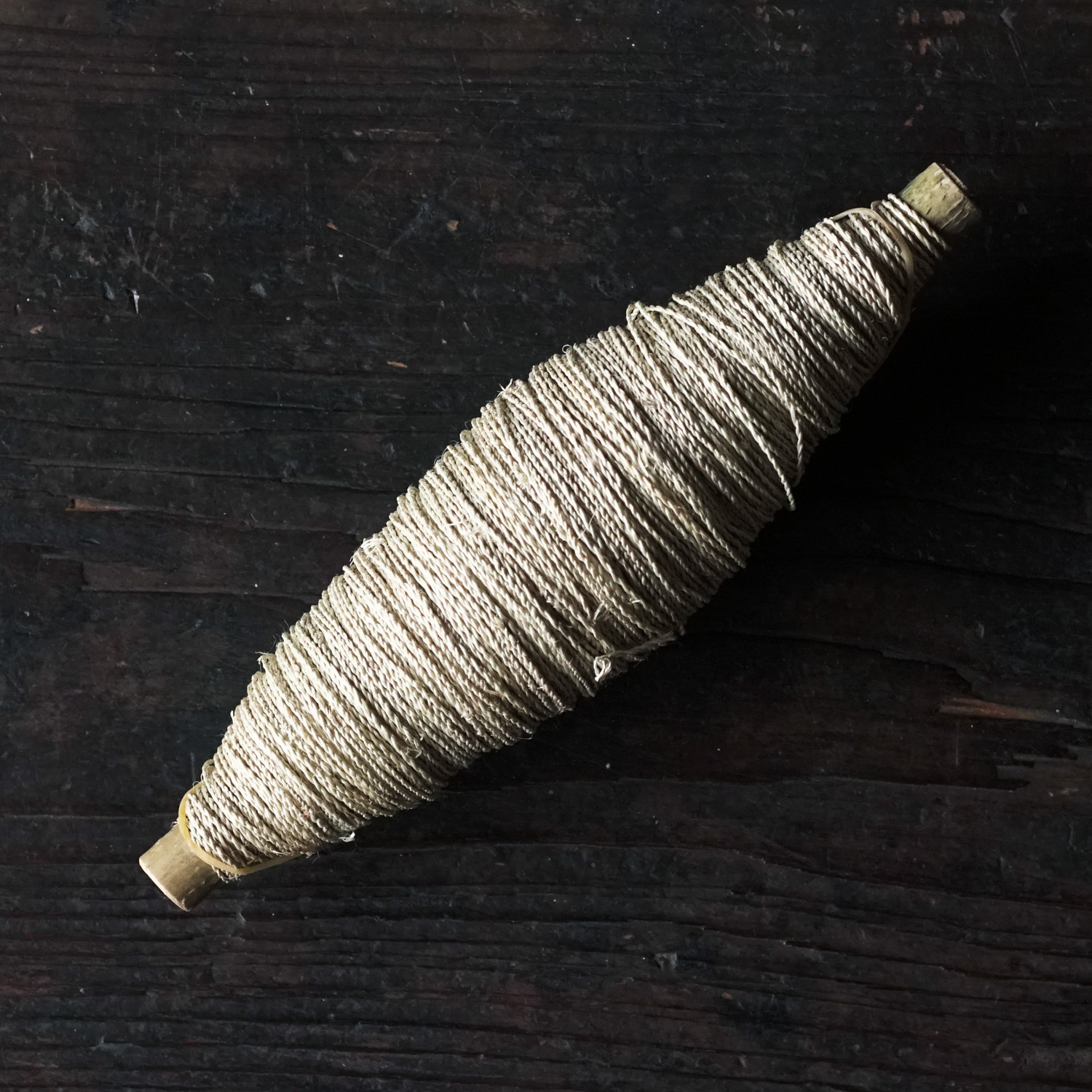
Yarn Weight|Fingering (2 Ply)
Weight|Approx. 40-50g
Hand-spun in Laos
Not enough stock.
Your item was not added to your cart.
Not enough stock.
Please adjust your quantity.
{{'products.quick_cart.out_of_number_hint'| translate}}
{{'product.preorder_limit.hint'| translate}}
Limit {{ product.max_order_quantity }} per order.
Only {{ quantityOfStock }} item(s) left.
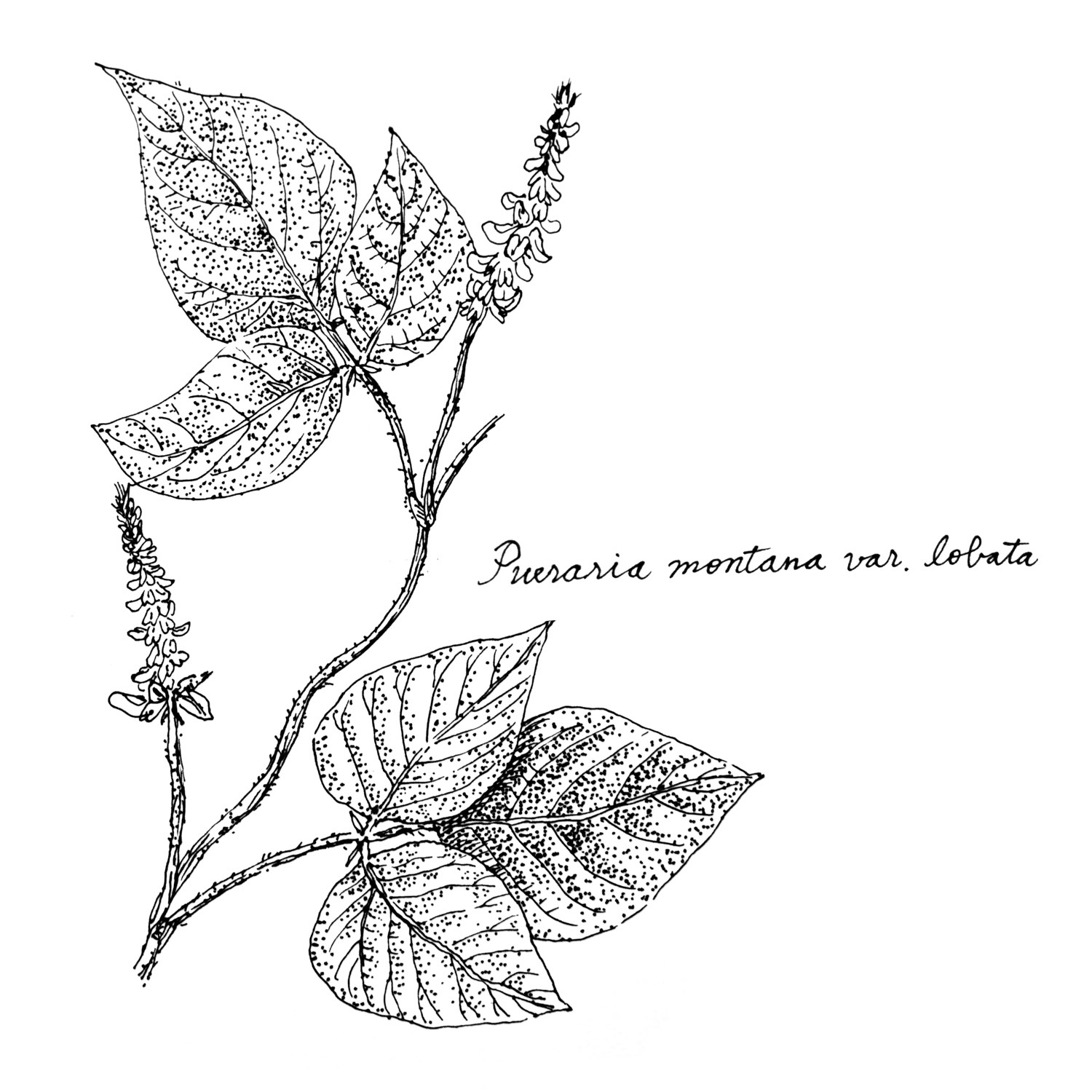
Kudzu, or Lobed Kudzuvine (Pueraria montana var. lobata), is a perennial, large climbing vine in the legume family. A single vine can grow up to 20 meters long. Its thick, woody stems, trifoliate leaves with egg- to diamond-shaped leaflets, and bean pods are all covered in fine yellow-brown hairs. It produces dense clusters of reddish-purple flowers arranged in a pagoda-like shape.
Before cotton became widespread, kudzu fiber was used in ancient times to make clothing, shoes, and net bags. Kudzu grows throughout Asia and is not hard to find. But turning it into usable thread is a time-consuming and intricate process: the vines are split with a knife, the outer bark is peeled away, the first layer is removed, and then the strips are sun-dried, hand-torn, hand-twisted, and finally plied together into thread. Today, there are fewer and fewer places where hand-spun kudzu thread is still being made.
The fiber has a light golden hue, a clean, grassy fragrance, and a surface that is both smooth and tough—perfect for net-making. Kudzu fibers are quite fine—but don’t let that fool you; they’re more than strong enough. Working with them can make your fingers ache—like when you first start learning the guitar.
Whenever I work with kudzu, I feel like I’m participating in a revival of ancient natural fibers. Yet in reality, kudzu is an incredibly vigorous plant—fast-growing and capable of thriving even in barren, poor soil where few other species can survive. Because of this, it has also been used for erosion control and disaster prevention.
In Taiwan, kudzu often blankets the rocky slopes along highways or creeps through foothill forests, like a giant beast cloaked in green fur. In Japan, people still love to use kudzu starch in traditional sweets. Kudzu has always been close to us—yet its fiber, once an everyday material, now lives on only in the hands of a few remote indigenous communities.