{{ 'fb_in_app_browser_popup.desc' | translate }} {{ 'fb_in_app_browser_popup.copy_link' | translate }}
{{ 'in_app_browser_popup.desc' | translate }}
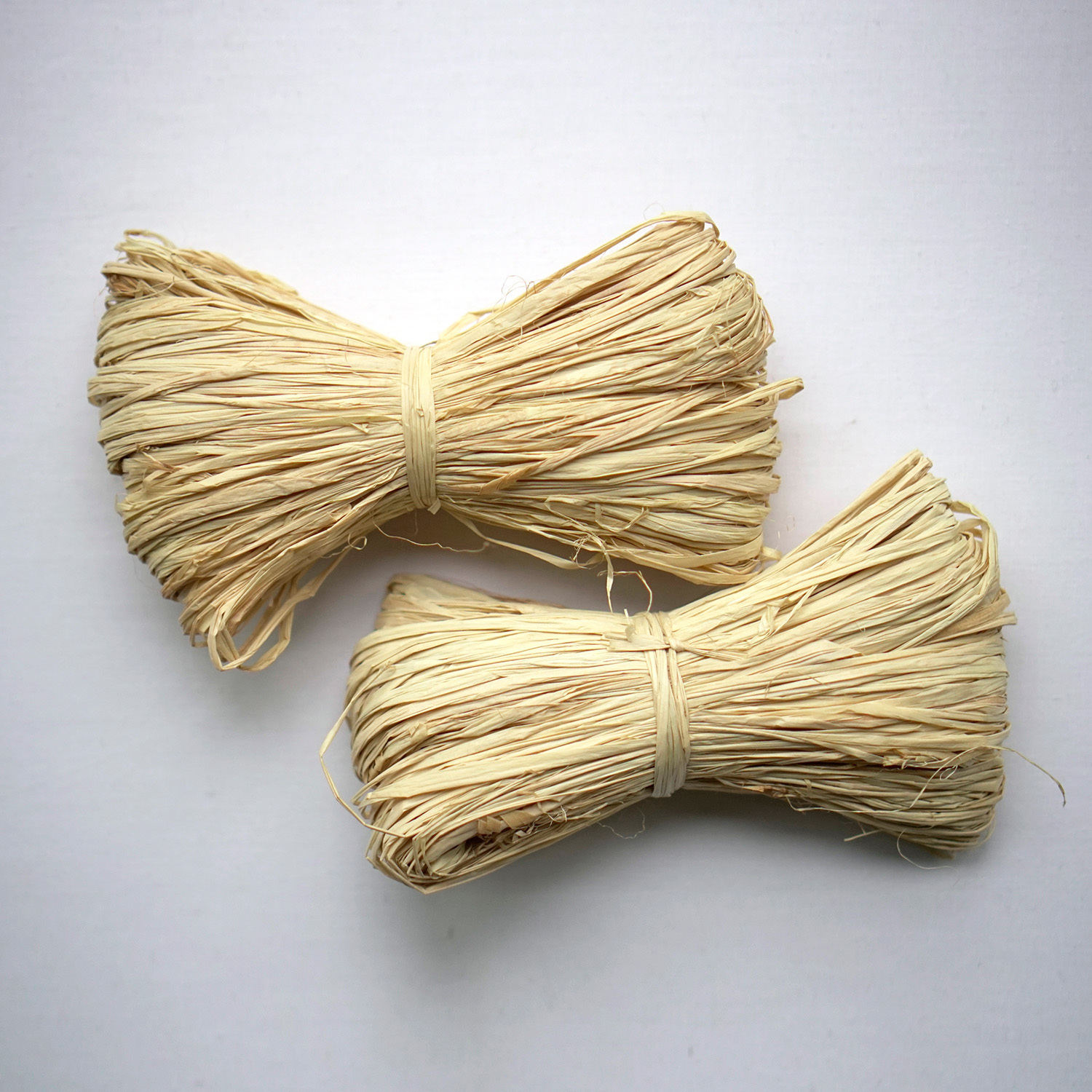
Weight|Approx. 50g
Origin|Madagascar
*Raffia usually comes folded back and forth into a bundle, then tied in the middle with one of its own strands to keep it together. Just undo the tie, and the whole thing falls open—ready to use.
Not enough stock.
Your item was not added to your cart.
Not enough stock.
Please adjust your quantity.
{{'products.quick_cart.out_of_number_hint'| translate}}
{{'product.preorder_limit.hint'| translate}}
Limit {{ product.max_order_quantity }} per order.
Only {{ quantityOfStock }} item(s) left.
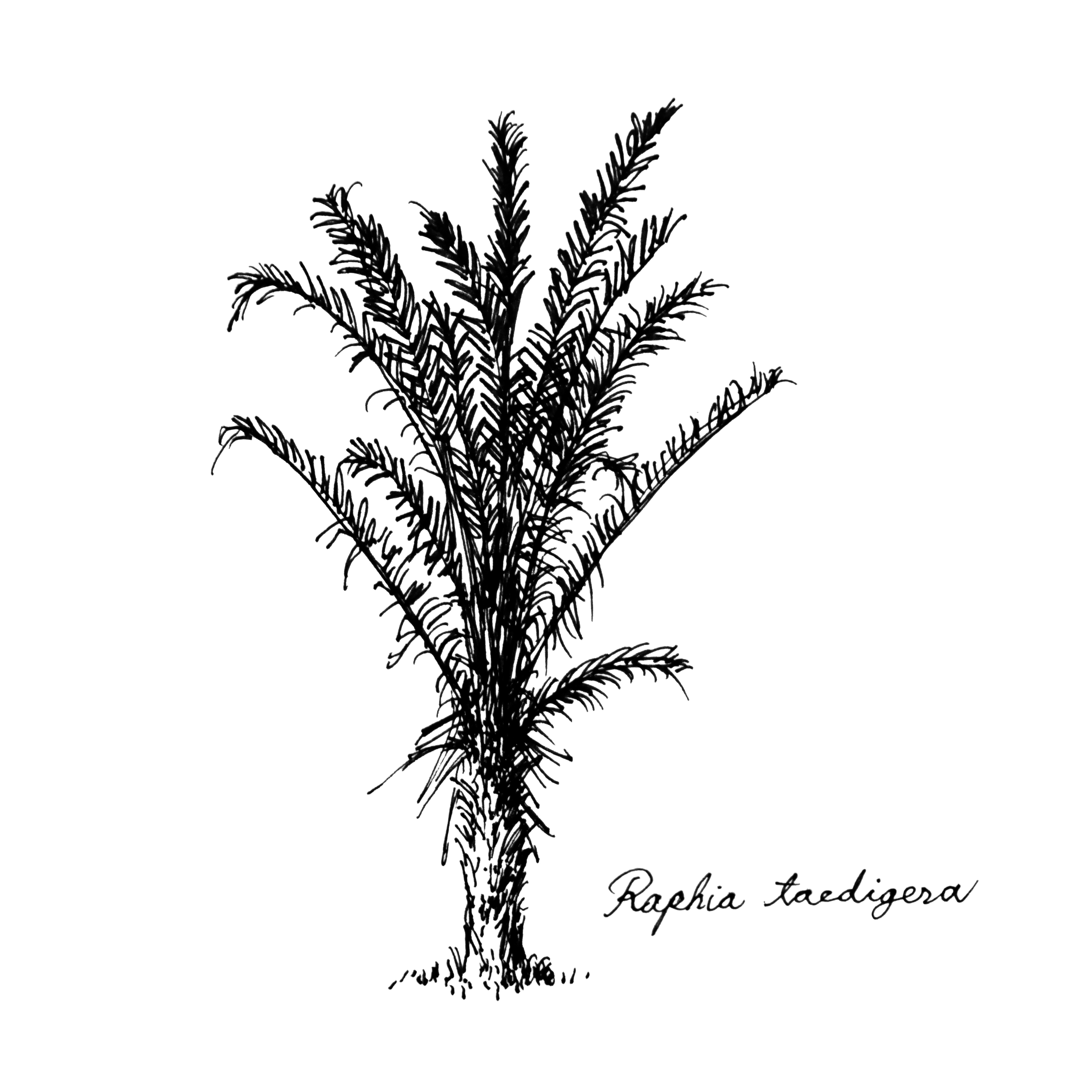
Raffia is not actually a type of grass, but rather the fiber from the leaf veins of a giant palm tree: the Raphia taedigera. This palm can grow up to 16 meters tall, and its pinnate compound leaves are among the largest in the plant kingdom.
Originally native to tropical Africa, raffia palms can also be found in Central and South America. The fibers of raffia are incredibly versatile and can be used to make rope, baskets, hats, shoes, and various woven products.
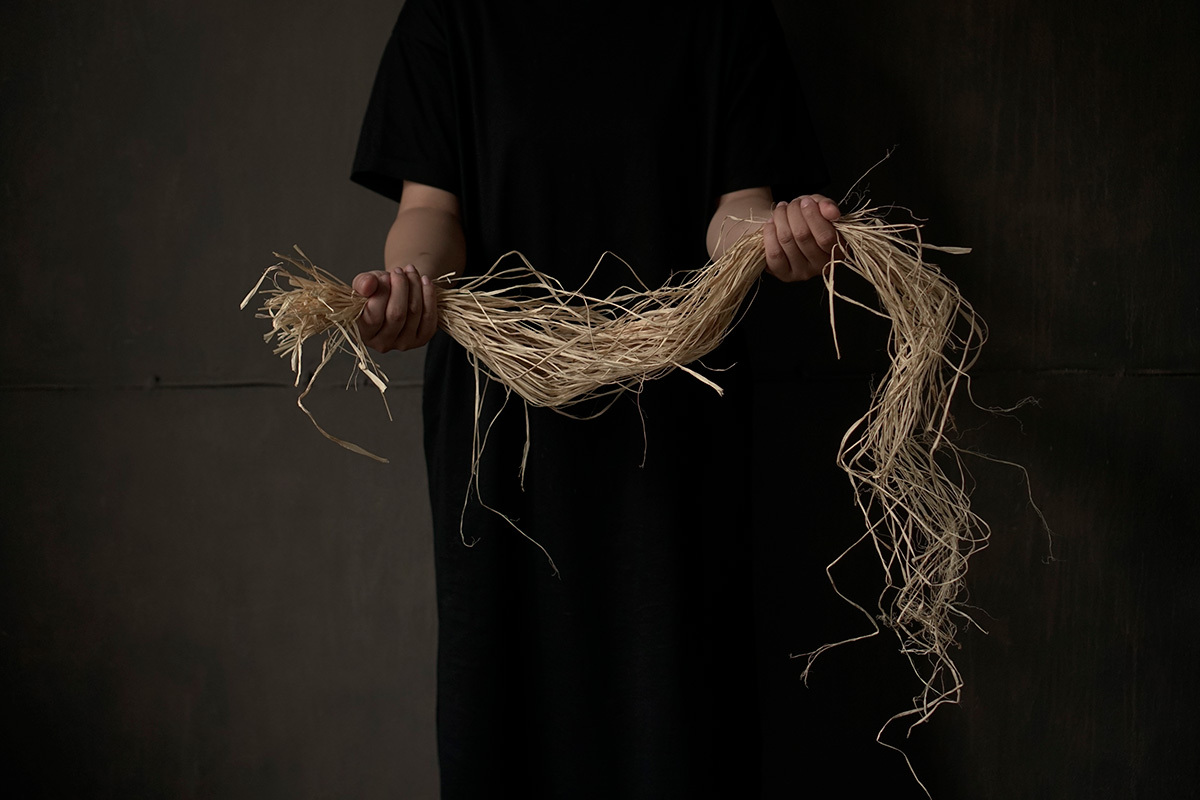
Unlike the continuous thread or yarn we're used to, raffia resembles dried strips of grass. They range in length from several tens of centimeters to about a meter, and their width and thickness are irregular.
Individual strands of raffia often split lengthwise along their fibers—much like how we can tear leaves of silvergrass, sugarcane, or corn along the veins.
In practice, you'll notice that raffia’s natural waxy texture makes it surprisingly pleasant to handle.
At first, its irregularity and fragmentation may seem daunting. But once you become familiar with this naturally unrefined material, you'll begin to feel a sense of creative freedom. If one strand isn't enough, simply use more; if it's too thick, just tear it down to the desired width. You may even find yourself, during a walk along a path or a hike in the wild, picking up leaves and twigs around you and instinctively starting to weave.

When using this hay-like fiber instead of the more familiar paper twine, you might encounter some common issues—like stiffness, inconsistent thickness, and frequent joins. But all of these can be managed. Here are a few key tips:
1. Custom ThicknessFor crochet work, raffia pairs well with a No. 7 hook (like in the Origami Balloon Bag pictured above). Of course, you can adjust based on the project and your preferences. The fibers themselves vary in thickness—if a strand is too thick, tear it to the desired size; if too thin, simply add another strand and crochet them together.
2. Joining TechniqueBecause raffia often needs to be joined, the following method helps keep the surface smooth and seamless—so you won't end up with visible knots everywhere:
(1) Raffia has a thicker end and a thinner end. When joining, use a tail that’s at least 10 cm long, and insert the thinner end into your work.
(2) After inserting the new strand, fold it back and continue crocheting with the two thinner ends and the remaining thicker one.
(3) Once the piece is complete, trimming the ends will help secure the stitches and prevent any unraveling.
Video:影片:https://www.youtube.com/watch?v=C0ov2WK2h6I&t=1s
(Special thanks to Grace, whose unwavering passion for raffia weaving has helped demystify the challenges of raffia weaving and made it accessible to all.)